A simple daily routine can keep household mess from piling up and make deeper cleaning much easier.
This daily cleaning checklist covers the essential tasks for kitchens, bathrooms, bedrooms, living spaces, and floors so you can keep your home feeling clean and organized without spending all day cleaning.
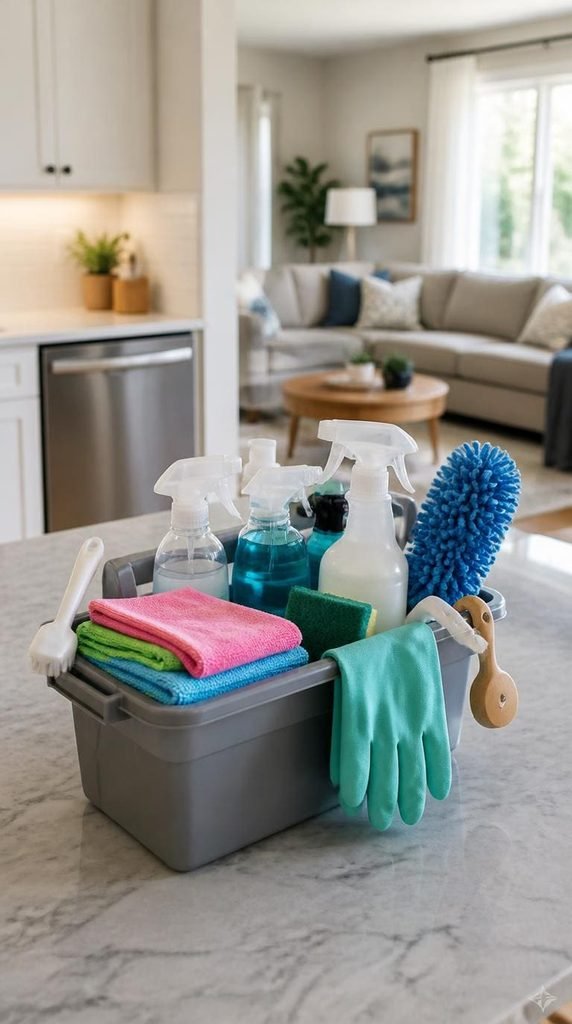
Daily Cleaning Supplies Checklist
Keep a small selection of everyday supplies within easy reach so quick cleaning tasks do not require a lot of preparation.
- All-purpose cleaner
- Disinfectant
- Microfiber cloths
- Cleaning sponge
- Scrub brush
- Duster
- Vacuum cleaner
- Broom and dustpan
- Mop and bucket
- Floor cleaner
- Glass cleaner
- Dish soap
- Rubber gloves
- Trash bags
- Cleaning caddy
Daily Cleaning Checklist
Morning Cleaning Tasks
A few quick tasks in the morning can make the rest of the day feel more organized. Focus on bedding, clutter, dishes, and the areas that become messy through everyday use.
1. Make the Beds
Straighten sheets, fluff pillows, and pull the blankets or comforter into place. Making the beds takes only a few minutes but immediately makes bedrooms look more orderly and gives you a simple starting point for the day’s cleaning routine.
2. Open Curtains and Blinds
Open curtains or blinds to let natural light into the rooms and give the home a fresher feel. While doing this, quickly check windowsills for visible dust, crumbs, or other debris that may need attention.
3. Put Away Clothing
Collect clothes left on beds, floors, chairs, and other surfaces. Return clean items to drawers or closets and place worn clothing in the laundry hamper so clutter does not gradually build throughout the day.
4. Collect Dishes
Walk through the house and collect cups, plates, bowls, and other dishes. Return them to the kitchen and either wash them or load them into the dishwasher so used dishes do not accumulate in different rooms.
5. Wash or Load the Dishes
Clean the dishes from the previous day or load them into the dishwasher. Wipe away food residue from the sink area afterward and leave the kitchen ready for the next meal.
6. Clear Kitchen Counters
Return appliances, containers, groceries, and other items to their usual places. Once the counters are clear, wipe away crumbs, food residue, and small spills before they become harder to remove.
7. Check the Refrigerator
Take a quick look inside the refrigerator for spilled food, expired leftovers, or items that need to be used soon. Wipe fresh spills immediately rather than allowing them to dry and become more difficult to clean.

Kitchen Cleaning Tasks
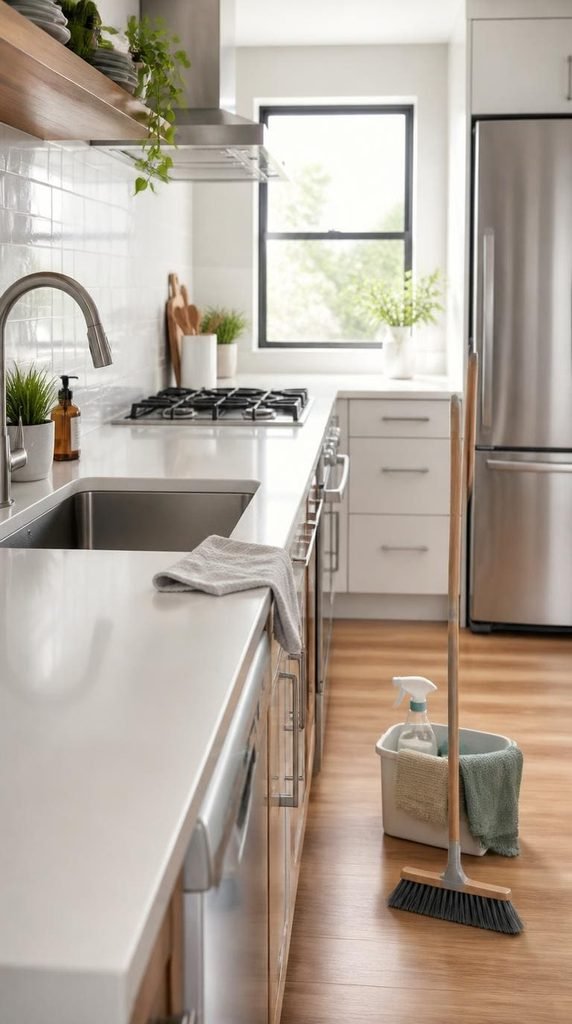
The kitchen usually benefits from attention throughout the day because cooking creates crumbs, spills, food residue, and dishes. Handling small messes promptly prevents them from turning into larger cleaning jobs.
8. Wipe Kitchen Counters
After preparing meals, wipe countertops to remove crumbs, grease, food residue, and spills. Pay attention to areas around the sink, stove, coffee maker, and other appliances where small messes tend to collect.
9. Clean the Sink
Rinse away food particles and wash the sink with dish soap or an appropriate cleaner. Wipe the faucet and handles as well, then leave the basin clear so it does not become a collection point for dirty dishes.
10. Wipe the Stovetop
Clean cooking spills and splatters soon after the stovetop has cooled and the surface is safe to clean. Regular wiping prevents grease and food residue from becoming hardened buildup that requires more intensive scrubbing.
11. Wipe Frequently Used Appliances
Give the microwave handle, refrigerator handle, coffee maker, toaster, and other frequently handled appliances a quick wipe. Focus on fingerprints, crumbs, food splashes, and other visible residue rather than attempting a full appliance deep clean.
12. Sweep Kitchen Floors
Sweep or vacuum the kitchen floor to remove crumbs, food particles, dust, and other debris. Concentrate on areas beneath the table, around the stove and sink, and along cabinet edges where food tends to accumulate.
13. Take Out Kitchen Trash
Empty the kitchen trash when it is full or contains food waste that could create odors. Replace the liner and wipe the bin lid or surrounding area if spills or residue are visible.
Bathroom Cleaning Tasks
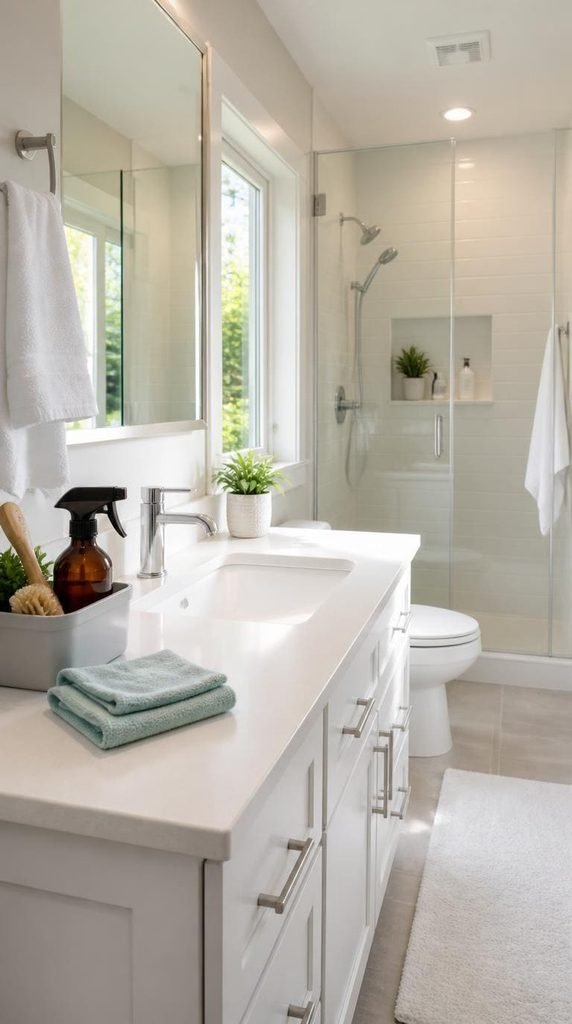
A quick daily bathroom routine keeps moisture, toothpaste residue, hair, and water spots from accumulating. Concentrate on the surfaces that are used most frequently.
14. Wipe the Bathroom Sink
Rinse the basin and wipe away toothpaste, soap residue, hair, and water spots. Quickly clean the faucet and handles as well, leaving the sink area dry and ready for the next use.
15. Wipe the Bathroom Counter
Clear toiletries and personal items from the counter, then wipe the entire surface. Clean up water, makeup residue, toothpaste, and other small spills before returning the items to their usual places.
16. Clean the Toilet
Give the toilet bowl and surrounding surfaces a quick clean when needed. Wipe the seat, lid, flush handle, and exterior, paying particular attention to frequently touched areas.
17. Rinse the Shower or Tub
After showering, rinse away loose soap residue and hair from the shower or tub surface. A quick rinse can reduce the amount of buildup left behind between more thorough bathroom cleaning sessions.
18. Squeegee Shower Glass
If you have glass shower doors, use a squeegee after showering to remove excess water. This simple step can reduce water spots and help keep the glass looking cleaner between deeper cleanings.
19. Hang Towels Properly
Spread towels out on their rails or hooks so they can dry thoroughly between uses. Avoid leaving damp towels in piles, where moisture can linger and create unpleasant odors.
20. Check the Bathroom Floor
Quickly sweep or wipe up visible hair, dust, water, or other debris. Addressing small messes immediately helps prevent dirt from being tracked into other parts of the home.
Living Room and Common Areas
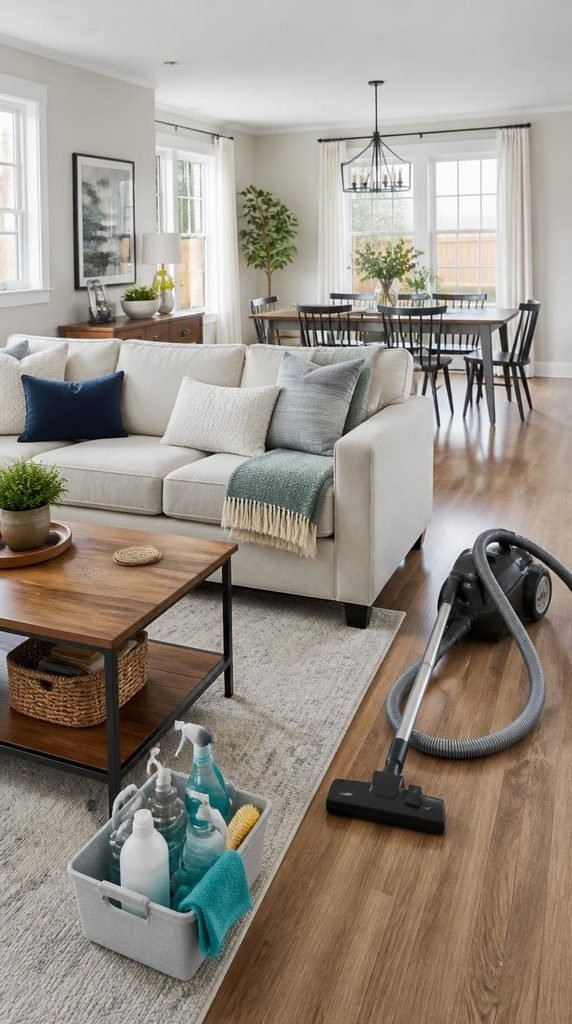
Shared spaces can become cluttered quickly because they are used throughout the day. A few simple tasks can keep them looking orderly without requiring a full cleaning session.
21. Put Away Items
Return books, toys, electronics, blankets, shoes, and other belongings to their proper locations. Clearing surfaces and floors at the end of the day makes the next morning feel more organized.
22. Fluff and Straighten Cushions
Straighten sofa cushions, arrange pillows, and fold blankets. Check between cushions for crumbs or small items and remove them when necessary.
23. Wipe High-Touch Surfaces
Quickly wipe commonly touched surfaces such as remote controls, door handles, light switches, and frequently used tables. Focus on areas that receive regular contact throughout the day.
24. Dust Visible Surfaces
Use a microfiber cloth or duster to remove obvious dust from tables, shelves, media consoles, and other exposed surfaces. Save detailed dusting of less noticeable areas for your weekly or deep-cleaning routine.
25. Clear the Dining Table
Remove dishes, food containers, mail, and other items from the dining table. Wipe the surface after meals, especially when food or drink has been spilled.
26. Vacuum High-Traffic Areas
Vacuum or sweep the areas that receive the most foot traffic, particularly around entrances, living spaces, dining areas, and other spots where dirt and crumbs appear quickly.
Evening Cleaning Tasks
A short evening reset can prevent the day’s mess from carrying into tomorrow. Focus on dishes, clutter, kitchen surfaces, and anything that needs attention before bedtime.
27. Wash the Evening Dishes
Wash dishes after dinner or load them into the dishwasher. Clean cookware, utensils, and food containers as well so the kitchen is not left with a sink full of dishes overnight.
28. Wipe Down the Kitchen After Dinner
Clean counters, the stovetop, dining surface, and other areas affected by meal preparation. Removing food residue before it dries can make the next day’s kitchen cleanup much faster.
29. Sweep the Main Floors
Do a quick sweep or vacuum of the kitchen and other areas where crumbs, dust, and debris accumulated during the day. Focus on visible messes and high-traffic areas rather than trying to deep clean every floor.
30. Empty Small Trash Bins
Check bathroom, bedroom, office, and other small wastebaskets. Empty bins that are full or contain food-related waste, then replace liners where needed.
31. Reset the Living Areas
Return blankets, pillows, books, toys, electronics, and other items to their places. Straighten furniture and clear surfaces so the main living areas are ready for the following day.
32. Do a Final Clutter Sweep
Walk through the home for a final few minutes and look for anything that is out of place. Returning these items before bedtime keeps small messes from becoming a larger cleaning project later.

How to Complete Your Daily Cleaning Routine Efficiently
Daily cleaning works best when it feels manageable rather than overwhelming. You do not need to spend hours cleaning every room from top to bottom.
- Start with clutter: Put misplaced items away before wiping or vacuuming so surfaces and floors are easier to clean.
- Clean as you go: Wipe spills, wash dishes, and return items to their places instead of allowing small messes to accumulate.
- Focus on high-use areas: Give the kitchen, bathrooms, entryway, and main living spaces the most attention.
- Use a cleaning caddy: Keep frequently used supplies together so you can move easily from one room to another.
- Work in short sessions: A 10–15 minute reset in the morning or evening can make the routine feel much easier.
- Leave detailed tasks for later: Save tasks such as washing windows, cleaning inside appliances, and scrubbing baseboards for your weekly or deep-cleaning schedule.
- Finish with floors: Sweep or vacuum after surfaces and clutter have been handled so newly fallen debris can be removed at the end.
How Often Should You Do Daily Cleaning Tasks?
Some cleaning tasks are best handled every day, while others only need attention when they become noticeably dirty. Adjust the routine to your household and the amount of daily activity.
- Every morning: Make beds, put away clothing, collect dishes, and clear obvious clutter.
- After meals: Wash dishes, wipe counters, clean food spills, and check the dining area.
- After showering: Rinse the shower or tub, squeegee glass when applicable, and hang towels so they can dry.
- Each evening: Reset the living areas, wash remaining dishes, wipe kitchen surfaces, and handle visible floor messes.
- As needed during the day: Clean spills, remove food residue, empty full trash bins, and deal with unexpected messes promptly.
Daily Cleaning Checklist at a Glance
Morning
- ☐ Make the beds
- ☐ Open curtains and blinds
- ☐ Put away clothing
- ☐ Collect dishes
- ☐ Wash or load dishes
- ☐ Clear kitchen counters
- ☐ Check the refrigerator
Kitchen
- ☐ Wipe kitchen counters
- ☐ Clean the sink
- ☐ Wipe the stovetop
- ☐ Wipe frequently used appliances
- ☐ Sweep kitchen floors
- ☐ Take out kitchen trash
Bathroom
- ☐ Wipe the bathroom sink
- ☐ Clean the bathroom counter
- ☐ Clean the toilet
- ☐ Rinse the shower or tub
- ☐ Squeegee shower glass
- ☐ Hang towels properly
- ☐ Check the bathroom floor
Living Areas
- ☐ Put away items
- ☐ Straighten cushions
- ☐ Wipe high-touch surfaces
- ☐ Dust visible surfaces
- ☐ Clear the dining table
- ☐ Vacuum high-traffic areas
Evening Reset
- ☐ Wash evening dishes
- ☐ Wipe the kitchen after dinner
- ☐ Sweep main floors
- ☐ Empty small trash bins
- ☐ Reset living areas
- ☐ Do a final clutter sweep