Keeping your home clean becomes much easier when everyday messes, dust, and buildup are handled regularly.
This house cleaning checklist covers the main areas of your home, from bedrooms and bathrooms to the kitchen, living spaces, floors, and often-overlooked spots, so you can work through each task in an organized way.
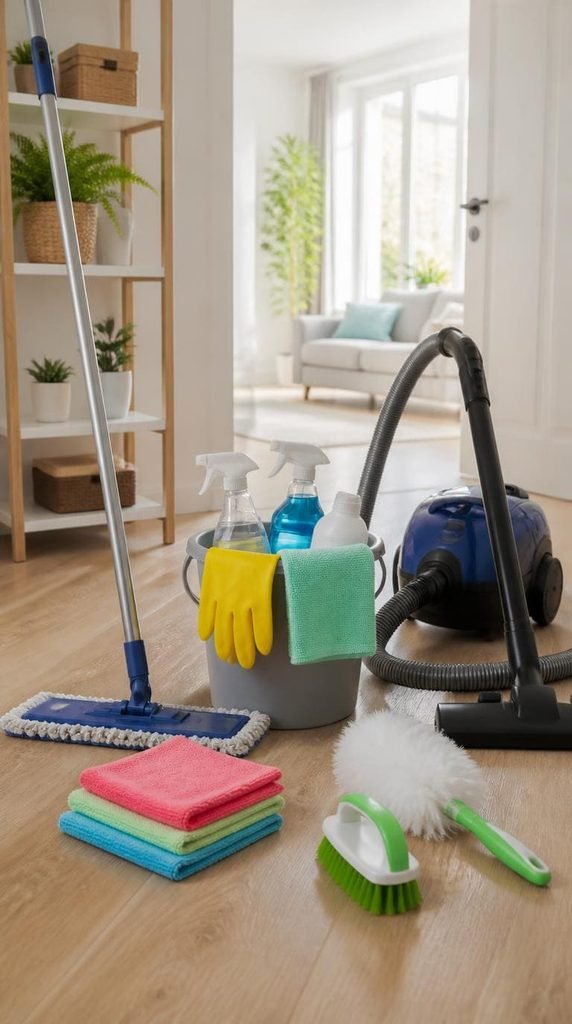
House Cleaning Supplies Checklist
Having your cleaning supplies ready before you begin can save time and make the process more efficient. Gather the basics you use throughout the home, then add any specialty products needed for particular surfaces.
- All-purpose cleaner
- Glass and mirror cleaner
- Disinfectant
- Microfiber cloths
- Cleaning sponges
- Scrub brush
- Duster or extendable duster
- Vacuum cleaner
- Broom and dustpan
- Mop and bucket
- Floor cleaner
- Baking soda
- Rubber gloves
- Trash bags
- Paper towels
- Toilet brush
- Old toothbrush for small areas
House Cleaning Checklist
Whole-House Cleaning
Start with the areas that affect several rooms at once. Removing clutter and dust before moving on to detailed cleaning helps prevent dirt from settling back onto surfaces you have already cleaned.
1. Declutter Each Room
Walk through the house with a basket or box and collect items that are out of place. Return belongings to their proper locations, gather stray dishes and clothing, and clear surfaces so the rooms are easier to clean thoroughly.
2. Dust High Surfaces
Use a microfiber duster to clean ceiling fans, light fixtures, curtain rods, the tops of cabinets, and other elevated surfaces. Work from higher areas downward so falling dust can be removed later instead of settling onto freshly cleaned surfaces.
3. Dust Furniture and Shelves
Wipe bookshelves, tables, dressers, cabinets, and other furniture with a dry or slightly damp microfiber cloth. Pay attention to corners, decorative items, and areas behind objects where dust tends to collect unnoticed.
4. Clean Light Fixtures and Switches
Wipe accessible light fixtures, lamps, and switch plates to remove dust and fingerprints. Use a lightly dampened cloth rather than spraying cleaner directly onto electrical components, and make sure surfaces are dry afterward.
5. Clean Doors and Door Frames
Wipe doors, handles, frames, and areas around frequently used entrances. Fingerprints, dust, and marks can build up quickly around handles and edges, making these areas worth including in your regular cleaning routine.
6. Clean Windows and Glass
Clean interior windows, mirrors, and glass surfaces using an appropriate glass cleaner and lint-free cloth. Wipe in overlapping strokes and check the surface from different angles to catch streaks or missed fingerprints.
7. Vacuum Upholstery
Use the appropriate vacuum attachment to clean sofas, chairs, cushions, and other upholstered furniture. Remove cushions when possible and vacuum underneath them, where crumbs, dust, hair, and other debris often accumulate.
8. Clean Under Furniture
Move lightweight furniture when possible and vacuum underneath beds, sofas, tables, and other pieces. These hidden spaces can collect significant amounts of dust, pet hair, crumbs, and debris between regular cleanings.
9. Empty Household Trash Bins
Empty wastebaskets throughout the house and replace the liners. Wipe the inside and outside of bins when needed, especially if they contain food residue or anything that may leave behind an unpleasant odor.
10. Vacuum or Sweep Floors
Remove loose dirt, dust, hair, and debris from floors throughout the home. Begin at the farthest room and work toward the exit when possible, making it easier to avoid walking over freshly cleaned areas.
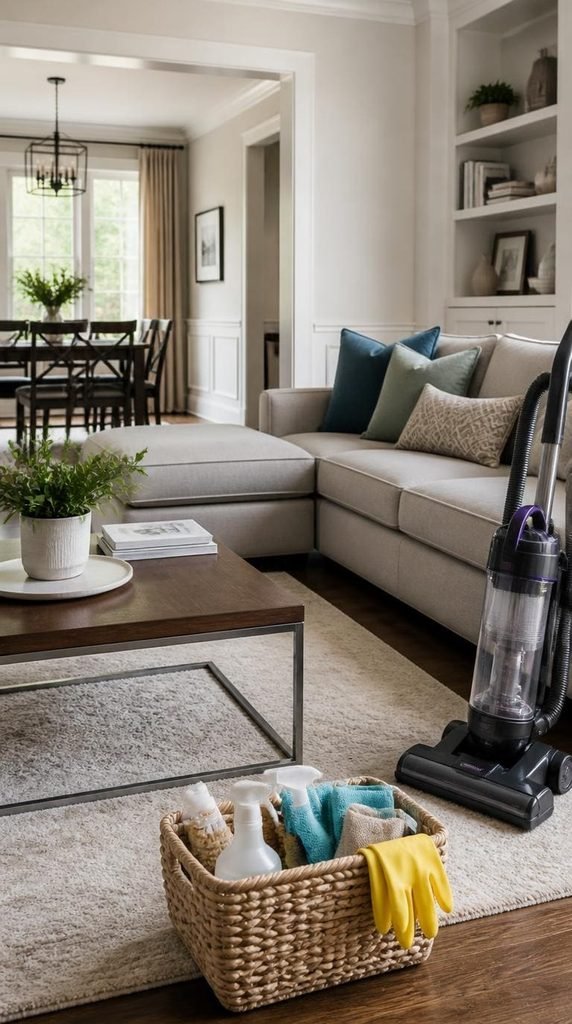
Kitchen Cleaning
The kitchen needs regular attention because cooking creates grease, food residue, crumbs, and moisture. Clean surfaces systematically, then finish with the floor so debris from earlier tasks can be removed.
11. Clear and Wipe Countertops
Remove appliances, containers, and other items from the counters before cleaning. Wipe the entire surface with an appropriate cleaner, paying particular attention to edges, corners, areas around small appliances, and spots where food residue collects.
12. Clean the Sink
Remove dishes and debris from the sink, then scrub the basin, drain area, faucet, and handles. Rinse thoroughly and wipe the fixtures dry to reduce water spots and leave the sink looking fresh.
13. Wipe Cabinet Doors and Handles
Clean cabinet fronts, especially around handles and frequently touched areas. Grease and fingerprints can gradually create a sticky film, so use a suitable cleaner for the cabinet material and avoid excessive moisture on wood surfaces.
14. Clean the Stovetop
Remove removable grates or burner components according to the appliance instructions and clean away grease, spills, and food particles. Pay attention to the edges and areas surrounding the burners where residue can remain after everyday cooking.
15. Clean the Microwave
Wipe the interior walls, ceiling, turntable, door, handle, and control panel. Remove dried food splatters before they become difficult to clean, and wash the removable turntable separately if it has accumulated grease or residue.
16. Wipe Kitchen Appliances
Clean the exterior surfaces of frequently used appliances such as the refrigerator, dishwasher, toaster, coffee maker, and oven. Pay special attention to handles, buttons, and areas where fingerprints or food particles commonly collect.
17. Clean the Refrigerator
Check for expired food and remove anything that is no longer needed. Wipe shelves, drawers, door compartments, and handles, cleaning spills as you go and drying surfaces before returning food to the refrigerator.
18. Wipe the Dining Table and Chairs
Clean the dining table, chair backs, seats, and legs where dust and crumbs can collect. For upholstered chairs, vacuum the fabric and seams to remove crumbs and other debris that may be difficult to spot.
19. Clean the Kitchen Floor
Sweep or vacuum the entire floor before mopping. Move lightweight items when possible and clean beneath the table, around appliances, along cabinet edges, and in corners where crumbs and grease can accumulate.
20. Empty and Clean the Trash Area
Remove the kitchen trash and wipe the bin, lid, surrounding floor, and nearby cabinet surfaces. Cleaning this area regularly helps remove food residue and prevents odors from lingering around the kitchen.
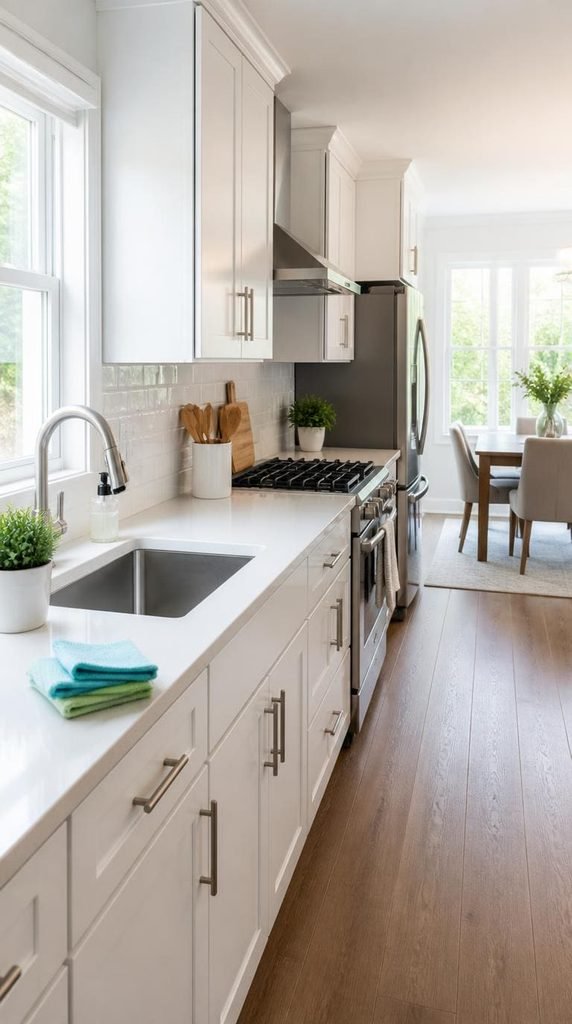
Bathroom Cleaning
Bathrooms collect moisture, soap residue, hair, and bacteria-prone buildup, so clean from top to bottom and finish with the floor. Give frequently touched surfaces extra attention.
21. Clean the Toilet
Apply toilet cleaner inside the bowl and scrub thoroughly with a toilet brush. Clean the seat, lid, rim, exterior, base, and flush handle with an appropriate disinfecting product, following the product directions.
22. Scrub the Shower or Tub
Remove bottles and other items before cleaning the shower or tub. Scrub walls, fixtures, corners, and the basin to remove soap residue, water spots, hair, and other buildup that develops with regular use.
23. Clean the Showerhead and Faucet
Wipe shower fixtures and faucets to remove water spots and residue. Check around joints and small crevices where buildup can collect, then rinse and dry the fixtures to leave them cleaner and less prone to spotting.
24. Clean the Bathroom Sink
Scrub the basin, drain area, faucet, handles, and surrounding countertop. Remove toothpaste residue, soap buildup, hair, and water spots, then rinse and dry the surfaces thoroughly.
25. Wipe the Mirror
Spray glass cleaner onto a suitable cloth or use the product according to its instructions, then wipe the mirror from top to bottom. Check for streaks and fingerprints around the edges and lower portion.
26. Wipe Cabinets and Drawers
Clean bathroom cabinet doors, drawer fronts, handles, and exposed surfaces. Remove products that no longer belong there and wipe away dust, hair, spilled toiletries, and residue before putting items back.
27. Wash Bath Mats and Towels
Collect used towels and washable bath mats and launder them according to their care instructions. Replace them with clean, completely dry items to help keep the bathroom feeling fresh.
28. Clean Bathroom Fixtures
Wipe towel bars, toilet paper holders, handles, shelves, and other fixtures. These surfaces are frequently touched but can easily be overlooked during quick cleaning sessions.
29. Sweep or Vacuum the Floor
Remove hair, dust, and debris from the entire bathroom floor before mopping. Work around the toilet base, behind the door, beside cabinets, and along wall edges where dirt often gathers.
30. Mop the Bathroom Floor
Use a suitable floor cleaner and mop the bathroom thoroughly, paying attention to corners and areas around the toilet and sink. Allow the floor to dry properly before replacing mats and other items.
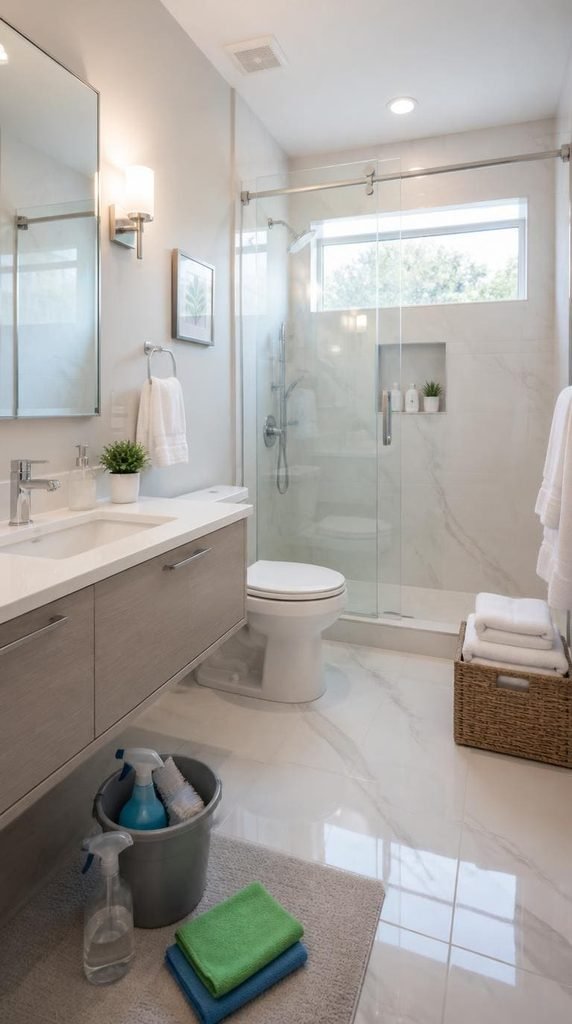
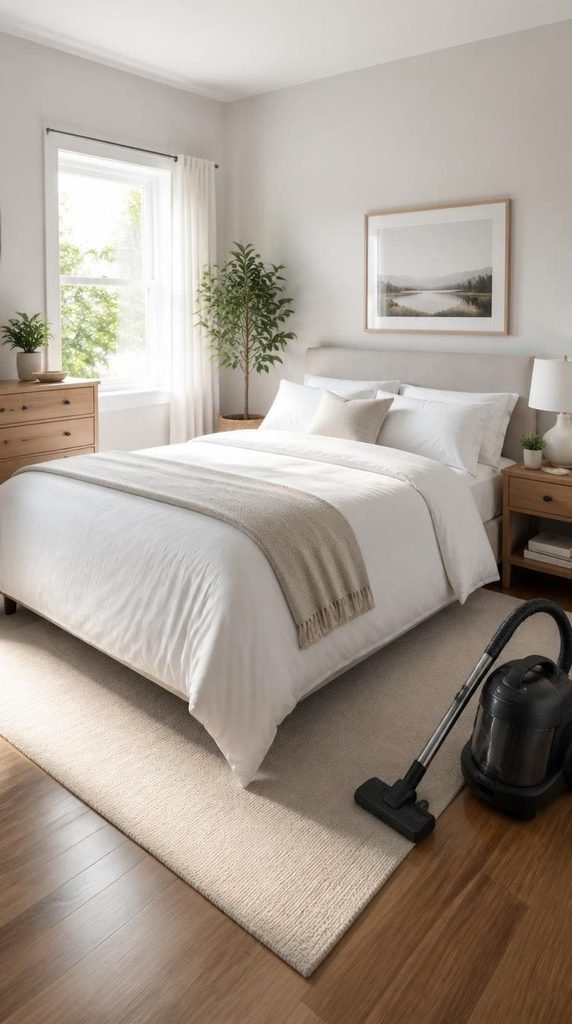
Bedroom Cleaning
Bedrooms collect dust, clothing, hair, and other debris around furniture and bedding. Start with clutter and surfaces, then clean the bed and finish with the floor.
31. Change the Bedding
Remove used sheets, pillowcases, and other washable bedding and replace them with clean items. Follow the care instructions for each material, and allow mattresses or pillows to air out when practical.
32. Dust Bedroom Furniture
Wipe nightstands, dressers, headboards, shelves, and other bedroom furniture. Move small objects as you clean so dust does not remain underneath decorative items, lamps, books, or personal belongings.
33. Clean Under the Bed
Vacuum beneath the bed and around its legs, removing dust, hair, and objects that have accumulated underneath. This area can be easy to ignore but often collects more debris than visible floor space.
34. Organize Clothing and Personal Items
Put away clean clothes, place dirty laundry in the hamper, and return shoes and accessories to their designated locations. Keeping these items organized makes the room easier to maintain between deeper cleaning sessions.
35. Vacuum or Mop the Bedroom Floor
Vacuum carpets and rugs thoroughly, including edges and corners. For hard floors, sweep or vacuum first and mop with a suitable cleaner, paying attention to areas beneath and beside furniture.
Living Room and Common Areas
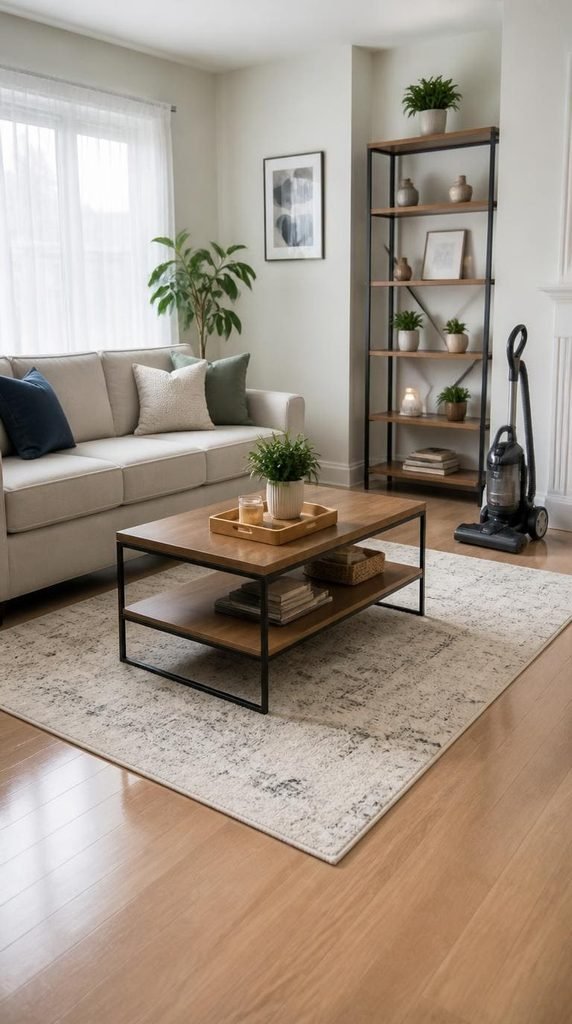
Living rooms and shared spaces receive frequent foot traffic, making them prone to dust, crumbs, fingerprints, and clutter. Finish these areas by cleaning the floor after surfaces and furniture are handled.
36. Dust Shelves and Decorative Items
Remove dust from shelves, picture frames, lamps, decorations, and other display items. Lift objects rather than dusting only around them so you can clean the surface underneath as well.
37. Clean Sofas and Chairs
Vacuum upholstered furniture thoroughly, including cushions, seams, armrests, and the spaces underneath removable cushions. Check care labels before using any liquid cleaner on fabric or upholstery.
38. Wipe Tables and Frequently Touched Surfaces
Clean coffee tables, side tables, media cabinets, remotes, and other frequently handled items. Focus on fingerprints, dust, crumbs, and sticky spots that may not be obvious from across the room.
39. Organize Shared Spaces
Return books, toys, blankets, electronics, and other belongings to their proper places. Use baskets or storage containers where appropriate to keep commonly used items organized without making the room feel cluttered.
40. Vacuum and Mop the Floors
Finish by removing dust, hair, crumbs, and other debris from the floors. Vacuum carpets and rugs thoroughly, then mop suitable hard surfaces while paying extra attention to high-traffic paths and corners.
How to Clean Your House Efficiently
Cleaning the entire house does not have to feel overwhelming. A consistent order can help you avoid repeating the same work.
- Declutter first: Put away items that are out of place before starting detailed cleaning.
- Work from top to bottom: Dust higher surfaces first so falling debris can be cleaned from lower surfaces later.
- Move through one area at a time: Finish the main tasks in one room before moving to the next.
- Keep supplies together: Carry a cleaning caddy so you do not repeatedly walk back and forth for products.
- Clean frequently touched surfaces: Give handles, switches, remotes, faucets, and other high-touch areas regular attention.
- Leave floors until last: Cleaning floors after surfaces and furniture prevents you from tracking dust and debris onto freshly cleaned areas.
- Use short cleaning sessions: If the whole house feels like too much, divide the checklist into smaller sections across several days.
How Often Should You Clean Your House?
Not every cleaning task needs to be done at the same frequency. A simple routine can help you keep up with everyday mess while reserving deeper tasks for less frequent cleaning sessions.
- Daily: Tidy clutter, wash dishes, wipe kitchen counters, clean obvious spills, and handle high-traffic messes.
- Several times a week: Vacuum or sweep high-traffic floors, clean bathroom surfaces, and empty household trash.
- Weekly: Dust furniture, clean bathrooms thoroughly, change bedding, vacuum carpets, mop hard floors, and clean kitchen surfaces.
- Every few weeks: Clean less noticeable areas such as under furniture, cabinet fronts, doors, baseboards, and hard-to-reach surfaces.
- Monthly or as needed: Deep clean appliances, wash curtains or washable textiles, clean windows, organize storage areas, and tackle areas that are easy to overlook.
House Cleaning Checklist at a Glance
Whole House
- ☐ Declutter each room
- ☐ Dust high surfaces
- ☐ Dust furniture and shelves
- ☐ Clean light fixtures and switches
- ☐ Clean doors and frames
- ☐ Clean windows and glass
- ☐ Vacuum upholstery
- ☐ Clean under furniture
- ☐ Empty household trash
- ☐ Vacuum or sweep floors
Kitchen
- ☐ Clean countertops
- ☐ Clean the sink
- ☐ Wipe cabinets and handles
- ☐ Clean the stovetop
- ☐ Clean the microwave
- ☐ Wipe appliances
- ☐ Clean the refrigerator
- ☐ Clean the dining area
- ☐ Clean the kitchen floor
- ☐ Clean the trash area
Bathroom
- ☐ Clean the toilet
- ☐ Scrub the shower or tub
- ☐ Clean shower fixtures
- ☐ Clean the sink
- ☐ Clean the mirror
- ☐ Wipe cabinets and drawers
- ☐ Wash towels and bath mats
- ☐ Clean bathroom fixtures
- ☐ Sweep or vacuum
- ☐ Mop the floor
Bedroom
- ☐ Change bedding
- ☐ Dust furniture
- ☐ Clean under the bed
- ☐ Organize clothing
- ☐ Vacuum or mop floors
Living Room and Common Areas
- ☐ Dust shelves and decorations
- ☐ Clean sofas and chairs
- ☐ Wipe tables and high-touch surfaces
- ☐ Organize shared spaces
- ☐ Vacuum and mop floors.